navbar

Thursday, 6 January 2022

Microchipping for cats is set to become law in the UK

Since 2016, all dogs have had to be microchipped, and around nine million currently have a chip.

However, it’s estimated that over a quarter of pet cats in the UK aren’t microchipped, as it is not a legal requirement to do so. Leading animal charities have campaigned for many years for this to change and to make the microchipping of cats a legal requirement of the owner … and it looks like things are about to change at last.
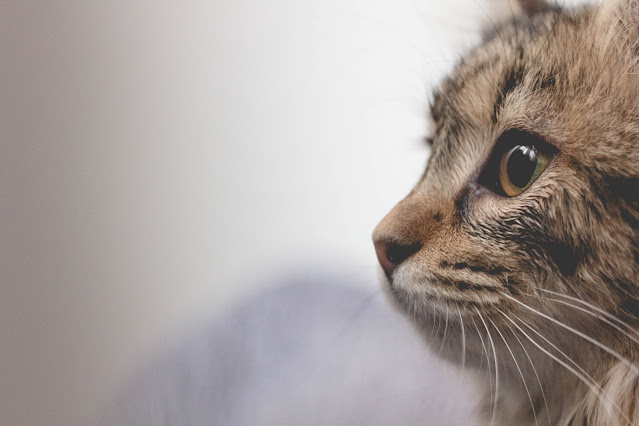


From 2022, the UK government is set to introduce new rules dictating that all pet cats must be microchipped by the time they are 20 weeks old (around five months). Owners will face a fine of up to £500 if they are found not to have microchipped their cat, after being given 21 days to have one implanted.


The benefits of microchipping are many, including making it easier to identify cats who are lost or stolen, enabling them to be reunited with their owner. Currently, eight out of 10 cats coming into Cats Protection centres are not microchipped.


It’s important that microchip details are kept up to date, so if an owner moves house, for example, they should update their address on the central database.


How easy is it for a pet to be microchipped?


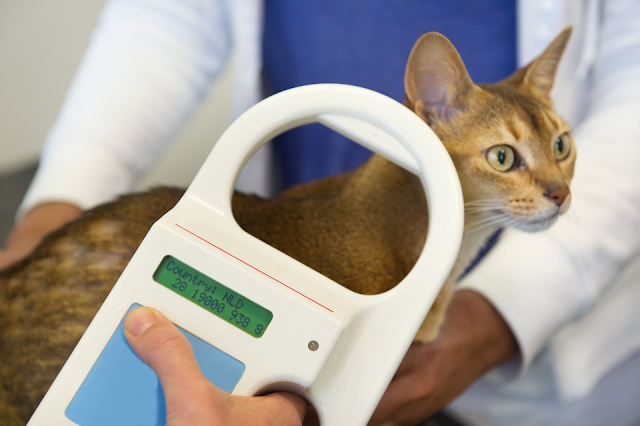
Usually, it is very easy. The microchip is a tiny device, about the size of a grain of rice, that is implanted just under the skin between the shoulder blades via a quick procedure that is pain-free for the animal. The chip can be scanned by a vet or animal care professional, which will bring up the owner’s details from a database, enabling him or her to be contacted to arrange return or collection.

Vets can offer advice and appointments for microchipping, which is not expensive, usually around £20, and some animal charities may offer this at reduced rates.


For just a few minutes of your time, chipping can help to alleviate the stress and worry when a cat goes missing. Without a chip, they may be handed into a rescue centre, and could be re-homed to a new owner, as there is no way of tracing their original owner. A chip also enables an injured cat to be reunited with their original owner, or, sadly, if they are killed, at least an owner knows what has happened.


You can read the government’s press release about cat microchipping, issued on 4 December 2021

here.


Below, a cat is scanned for a microchip


Thursday, 25 November 2021

Cats in the news (mews?) - felines can track their owner’s location, and 250,000 are feral in the UK


There has been a recent flurry of news stories in the UK media concerning cats, with some fascinating findings.


Researchers have discovered that cats have ‘the ability to picture the invisible in their minds’ with findings showing that they can imagine a mental representation of their owners even when they can’t see them. Studies at the University of Kyoto in Japan have discovered that cats can mentally map their location based on their owner’s voice through a series of experiments where cats cold hear only their owner’s voice. When the voice changed location, the cats appeared confused. It’s perhaps unsurprising given how important tracking and location is to cats in the wild, and how domestic cats associate food and security with their owner. 


More new research by the charity Cats Protection has found that around a quarter of a million cats (approximately the human population of Southampton) are currently unowned and feral, living in the UK’s streets. Unowned cats can pose problems as their numbers can expand rapidly if not controlled. Numbers vary across the country but are highest in densely populated and deprived areas. 

Cats Protection helps feral communities by neutering and finding homes for friendly unowned cats, and by giving local residents the means to looks after feral colonies in the community: for example, by building cat shelters and providing the materials to do so.  

Numbers of feral cats have increased as people return to work after lockdown, and some, sadly, are abandoned. It is good to know that Cats Protection is doing what it can to help the UK’s huge feral cat population.  


And lastly, a new social media superstar has arrived in the shape of Midas, a Russian Blue kitten from Turkey who has a recessive genetic mutation that gives her two sets of ears. Her hearing is unaffected, and she has been adopted, having originally been a rescue cat. You can follow Midas on Instagram at midas_x24.

Midas is pictured below, on her Instagram page, and has over 100,000 followers.


Thursday, 21 October 2021

Our roads are a serious risk for both wildlife and pets

Sadly, thousands of animals die on our roads every year, of which only a tiny fraction are reported.

Our road network in the UK runs through beautiful rural areas, hills, mountains and cities, but around all of our roads are where our wild creatures also live. In fact, in many cases the animals and birds lived there long before the roads and busy traffic came along, and so humans and their transport impose on natural highways that animals have used for hundreds of years.


Only the hardest-hearted driver can pass a dead animal who’s been a victim of a road accident and not feel pity: another innocent victim of the ever-increasing number of vehicles on the road. The insurance comparison website GoCompare has published detailed research on road traffic accidents involving animals, and it makes for sombre reading.


A pheasant – sadly, one of the most common victims of road accidents


The UK’s longest road, the A1, is unsurprisingly the most lethal for wildlife accidents by quantity, with deer the species most frequently involved in accidents, followed by badgers, and then cats. The figures show that both wild and domesticated creatures are at risk on our roads. Dead deer are a common sight on rural roads, and they are increasingly likely to live near to residential areas as their habitats are encroached upon for development. ‘Deer crossing’ road signs are put up for a reason, and drivers should heed them and be more aware in those areas; an average of £24,000 is claimed on car insurance each year for deer-related damage.


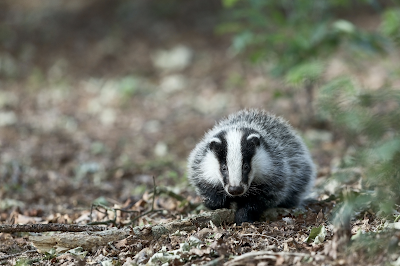
Other animals who don’t fare well on roads are badgers and pheasants, with hedgehogs, foxes and rabbits also the most likely to be hit by cars, as roads encroach on their habitats.


Badgers are often victims of road accidents, too


July is the month when the most accidents occur: unsurprising, given that this month includes the start of the school holidays, when many head off for breaks in cars, camper-vans and caravans, and onto less familiar roads.


A collision with an animal can be a traumatic experience for all concerned, and is often fatal for the animal. The key things to remember if you do hit an animal are:


• Stay calm and pull over safely


• If you have hit a dog or farm animal, you must report it to the police, whether or not the accident results in the animal’s death. Regarding cats, the law is being reviewed, but it is best tell a local vet, and ideally, take the cat to them.


• Be cautious with animals who are still alive after a collision, as they will be scared and in pain and may panic. Call 101 and report the accident, and the appropriate expert will be sent out.


• Report the accident to your insurance company as soon as you can, with full details.


The sad statistics of over 14,600 incidents on the roads involving animals annually (and that’s only those that are reported) paint a sorry picture of the sheer number of accidents involving animals and vehicles. As drivers, we should take heed of these facts and be more aware and cautious, in order to avoid unnecessary distress and injury – possibly death – to our native wildlife and domestic pets.


Foxes are often the victims of road accidents


With thanks to GoCompare.

Thursday, 30 September 2021

What makes us judge some animals unfairly?

Why do some animals have a bad reputation, and what makes us judge some creatures unfairly?


Many animal lovers claim to like all animals, however, some creatures seem to get a bad deal and are harder to ‘love’ because of their appearance, reputation, or myths about their behaviour. 


Appearance counts for a lot, whether or not we admit it. Cute, fluffy, big-eyed beasts are the ones who steal our hearts first. Perhaps they appeal more to our nurturing instinct, and over many thousands of years, animals who have become domesticated reflect this. Either that, or they are ‘useful’ to us for protection, transport or, in some cases, food.


But what about the much-maligned species – the ones that we don’t want to like? 

Is it because they are visually unappealing, or because they have a bad reputation, or perhaps because we don’t understand them?


                                             The wasp is a pollinator with bad PR?


Take the humble wasp. In summer they annoy us, buzzing around our garden while we enjoy drinks and snacks, threatening to sting us if we annoy them. Not as cute as the fluffy bumblebee, but not as terrifying as hornets (even worse). But how, exactly, do they help nature? Well, wasps are effective predators of small insects, keeping down aphid numbers, and so providing a useful service. Some are also pollinators, helping certain fruits to thrive. Perhaps we’ll not be so quick to swat them away in future.


                                    Wolves have an undeserved bad reputation


Another animal that has an undeservedly bad reputation in the wolf. Handsome, regal, aloof and dangerous? But not so far away from the domesticated dogs that we love and welcome into our lives, with many similar traits. They are pack and family animals, loyal to their group, and only hunt because they are carnivores and need to eat. Unscrupulously hunted in many countries, they have managed to survive through intelligence and by adapting. Myth and folklore have added to the bad reputation of the wolf - undeservedly so.


Other creatures who have an undeserved ‘bad press’ include sharks, spiders, pigeons, bats and rats. Think of a horror film, and perhaps one (or more) of these is almost certain to appear. But each species has a highly refined set of skills that enables it to thrive. So before we flinch at their appearance, perhaps stop for a moment and consider what they can do…. Build an intricate web, navigate over thousands of miles, use sonar to ‘see in the dark’ – just some of the amazing behaviours they demonstrate.


                             Bats are associated with horror, but are extremely smart


Every creature has a unique set of skills and qualities, so let’s appreciate them for the amazing things they can do!

Thursday, 9 September 2021

SITT, stay and learn


Dog training: something every responsible dog owner has to consider. But with so many methods and trainers, finding one right for you and your dog can be hard. Add the pandemic into the mix, and accessing good quality paw-to-paw training has become almost impossible, understandably increasing anxiety and frustration for owners who wish to properly train their dogs, or address any behavioural issues.

But, if the pandemic has proven one thing, it’s that technology can be highly effective in connecting directly with people we can’t meet in person. Doctors and therapists, office workers and family gatherings; the Zoom meeting has become a new, vital way for many of us to communicate in real time. And now we can add dog trainers to the list …


Hubble & Hattie subscribers will be familiar with dog trainer Pat Blocker CPDT- KA of Peaceful Paws Dog Training. Pat, pictured right with her fellow 'behaviour experts' Penny and Jett, has been solving canine behavioural issues utilising force-free methods for over 20 years, and has written Taking the Lead without Jerking the Leash and the Hubble & Hattie-published Letting in the dog

A member of the APDT and a Fear Free Certified Professional, Pat is co-founder of Professional Therapy Dogs of Colorado, an organisation providing education in animal assisted therapy for mental health professionals. It's fair to say that Pat knows a thing or two about dogs!

Say what?

We all know that dogs use scent (hence all that p-mail checking on your walks) and sound to communicate, but a dog’s main channel is posture, tail signalling and facial expression: body language. Letting in the dog focusses on how to better understand how dogs communicate, and what they are trying to tell us. Exploring both the intuitive and the intellectual sides of human-canine communication, Pat shows how to better read and interpret and understand how our dog communicates with us, and perceive what they are trying to 'say.'

The message may be science based, but Letting in the dog is no dry academic tome; Pat takes a light-hearted yet earnest approach to exploring how to connect with dogs, showing how to stop talking at your dog, and start having effective two-way communication with them. Amusing and thought-provoking anecdotes and illustrations help show that we can all learn as much from our dogs as they do from us, and, by connecting with them, we learn how to connect with and understand ourselves better. 

SITT? Stay!

During the pandemic, Pat has turned her skills to developing a method that will enable dog owners to access effective, ethical training advice, despite being unable to meet 'muzzle-to-muzzle,' so to speak. The result is the SITT programme. SITT – Science, Intuition, Trust, Training – is a live, interactive webinar hosted via Zoom

Based on the methods Pat describes in Letting in the dog, SITT is much more than a training method; it’s a way of transforming our life with our dog, and takes a deeper dive into training, canine communication, and personal bond with our dog. 

SITT sessions provide your very own private 90-minute one-on-one, comprising a presentation by Pat, followed by a consultation so you can address any concerns you may have about your dog’s training or behavioural issues.

Pat covers much ground in 90 minutes, but to help you fully digest your SITT session, you’ll also receive a recording of the webinar to refer to as needed. Of course, being based on Letting in the dog, you could do no better for your first port of call than to get yourself a copy, and start on the path to a deeper understanding of you and your dog’s relationship.

International rescue

Pat is based in Colorado, USA, but Peaceful Paws training is exclusively virtual. By holding Zoom SITT sessions, Pat can connect with anyone anywhere in the world. The UK, Europe, South America … maybe even the Arctic: if you can access Zoom, you can access your own SITT session. Of course, you’ll need to work around time-zone differences, so check the details when arranging yours.

If you’re thinking this all sounds brilliant, but is bound to be expensive, think again. Pat is currently offering  SITT sessions for just $110 (just under £80 in UK money), so it's not only incredibly effective, but incredibly affordable.

SITT yourself down today

To find out more about Peaceful Paws Dog Training, head over to the website and facebook pages and see how Pat has been helping owners build-in better dog behaviour with empathy and expertise:

Peaceful Paws Home Page: http://peacefulpaws.net/

You can find further details of the SITT programme at http://peacefulpaws.net/webinars/

A head-start

If you want to get properly prepared for your SITT programme, or if you simply want to increase your understanding of your dog and improve your relationship with them, you’ll need a copy of Letting in the dog: Opening hearts and minds to a deeper understanding. Click the link below to get your copy from Hubble & Hattie at only £7.41 (excluding P&P) when you use our STAYINANDREAD discount code. 

Letting in the dog
Opening hearts and minds to a deeper understanding

Where hearts and minds meet, true understanding begins!

Letting in the dog deals with the fascinating subject of reading canine body language and more, finding the intersection between academic and spiritual. The book explores the intuitive and intellectual sides of communicating with canines, in which space, we build trust and better relationships.

Communicating with and understanding dogs builds trusting relationships, relieves frustration and improves lives on both ends of the leash. Apart from simply reading canine body language, this book explores the juncture between hearts and minds where true understanding begins.

  • How to follow your intuition in understanding dogs
  • Developing intuitive communication with dogs
  • How we’re more like dogs than different from them
  • How our dogs mirror us
  • How dogs teach us to tune in to energy
  • How listening to what dogs are telling us opens doors to understanding
  • How removing the ego from the conversation opens the lines of communication
  • Seeing and interpreting the metaphors that dogs present to us
  • Getting the message from dogs and understanding how they are our teachers
  • How connecting with dogs connects us to ourselves

£10.99 ONLY £7.14 with our STAYINANDREAD code

SKU HH5305 Format Paperback • 15.2x22.5cm • 96 pages • 15 pictures ISBN 978-1-787113-05-3 UPC 6-36847-01305-9

Don’t forget you can use our STAYINANDREAD discount code to get 35% off the RRP, making for fantastic bargain at just £7.14, excluding P&P.

Thursday, 24 June 2021

Cool cats and canines – help keep your four-legged friends comfortable and safe in hot weather

With the welcome arrival of warm weather, many of us enjoy basking in the sunshine. Whilst cats and dogs may look happy to be feeling the sun on their coats, it’s easy for them to suffer in the heat, so be aware of the risks and help to keep them cool, comfortable and healthy in heatwaves.

For our pets, hot weather can be a challenge. As responsible owners, it’s important to prevent heatstroke, sunburn and dehydration by knowing and recognising the signs.

Keeping cats cool -

• Always leave out plenty of fresh cold drinking water - including a bowl outside if they go there and refresh it regularly

• White and light-coloured cats in particular can get sunburn, which in turn can lead to skin cancer. Speak to your vet about safe sunscreen for cats, and apply it to their ears and nose before they go outside. Don’t use human sunscreen, though, it must be animal-friendly

• If your cat is happy to be brushed do this more regularly: she may be moulting more and extra fur means extra heat, so helping with natural shedding will assist in keeping her cool

• Cats may naturally eat less in hot weather, so don’t worry. If this happens Don’t leave wet food out in the heat, however, as it will attract flies and go mouldy more quickly


Recognise the signs

If your cat begins panting, appears unsteady and anxious, and has dry gums, she is showing signs of heatstroke. Contact your vet immediately, offer clean fresh water, and cool her paws with a cold compress.


Chilled canines, not hot dogs!

Dogs can suffer in the heat, too, so, as with cats, ensure that yours has shade and cold water available all the time.


• Think before walking your dog in hot weather. Pavements can become very hot and easily burn paws, so test the heat by placing your hand on the surface – can you keep your hand there for more than a few seconds? If you feel pain, so will your dog, so walk after sunset or on real grass if during the day. Astroturf or artificial grass can become dangerously hot, so don't walk dogs on it

• Many dogs like playing in water, so if you have the space, put out a paddling pool for your dog to splash in, helping helping him to keep cool. Don’t fill it so much that there is a danger of drowning

• Never EVER leave your dog in a car in warm/hot weather. In a matter of minutes the temperature will become unbearable, with potentially fatal consequences. Every summer, the police have to break into cars and rescue dogs who have been left to overheat

• Pet product manufacturers now make cool mats for dogs. Some are kept in the fridge, and stay cool for a while, and others become cool by reacting to the dog’s weight. Also available are cool vests that, when made wet, help regulate temperature

Enjoy the summer safely with your pets, and keep cool!


(c) photos Unsplash


Thursday, 3 June 2021

A step towards improved animal welfare - UK law is set to recognise animals as sentient beings


In a victory for animal welfare campaigners, UK law is to formally recognise animals as sentient beings. Through a series of bills, including an Animal Sentience Bill, wide ranging topics will be covered by reforms, including live animal exports, the banning of the import of hunting trophies, the microchipping of cats and tackling puppy smuggling.


Photo by Madalyn Cox on Unsplash


Whilst undoubtedly a big step in the right direction for improvements in animal welfare, some issues have yet to be fully considered. Campaigners have long called for farming methods seen as needlessly cruel and inhumane, such as cages for poultry and farrowing crates for pigs, to be banned. However at present these are not subject to an outright ban, as was called for. Their use will be examined, and farmers will be offered incentives to improve animal health and welfare through the future farm subsidy regime. The government also pledged to uphold animal welfare in future trade deals, (but not put this into law).

The Government says that the Bill is the first step in the Action Plan for animal Welfare, which will “...further transform the lives of animals… “.

(Source: https://www.gov.uk/government/news/animals-to-be-formally-recognised-as-sentient-beings-in-domestic-law)


                                                                         Photo by Jo-Anne McArthur on Unsplash


However, questions remain around the definition of ‘animals’. Defined for the sake of the Bill as ‘vertebrate animals’, it is concerning that this will exclude, for example, highly intelligent creatures such as the octopus. And whilst there is a lot of debate and positive steps to encourage people to help depleting numbers of pollinators such as bees, wasps and butterflies to thrive, there is no direct correlation between the new Bill and them.


So, whilst undoubtedly a big step forward for animal welfare in the UK, we hope that the breadth and scope of the Bill continues to broaden to take into account all sentient beings, not just those that are ‘vertebrates’.


What are your thoughts about the introduction of the new Bill? Do you think it goes far enough to protect animals? We’d love to hear your thoughts. Please add your comments, thanks.