navbar

Showing posts with label #pets. Show all posts

Thursday, 9 November 2023

Do people care more for dogs or cats? Recent research puts this age-old question into focus


It’s a debate as old as time – dogs versus cats – and how much their owners care for them.

Are people really either a ‘dog’ or cat’ person? Do they have to be different, and must they be one or the other?

Now new research published in Psychology Today sheds light on owners’ attitudes and devotion to their beloved companions, investigating whether dog or cat owners have a stronger emotional attachment for their respective pets.

A difficult thing to determine, you would think, as it would be based on loyalty, devotion and love for the companion animal. However the study quantified it by asking how much an owner would be prepared to spend on their dog or cat on life-saving veterinary care, should it be needed.

Owners, were asked “if your pet had a life-threatening problem and could be saved by a medical procedure, what would you be willing to pay for treatment?’. 

The amount dog owners were prepared to spend was approximately double that of cat-owners on cats!

However, certain factors need to be considered...


For example, dogs, on average, are taken to the vet twice as often as cats, and are more likely to receive preventative care such as vaccinations and dental treatment. This could show that dog owners are more used to the financial demands of ownership, and therefore more willing to accept that they will pay more for an emergency medical procedure.

Many owners of both dogs and cats have medical insurance, and this is also likely to affect their answer.

Dogs can also be ‘high maintenance’, with owners willing to pay for regular grooming and in some cases day care for walking or drop in visits for their dog. Cats, on the other hand, are usually more ‘low maintenance’, can be groomed by the owner or groom themselves, and being more independent, can be left without company for longer periods.


Whilst the findings are interesting, it is hard to accept that simply because dog owners are willing to spend more on emergency care, it means they are more devoted to their animal companion.

Many cat owners are utterly devoted to their pets, and will do whatever is necessary for them if needed. As a lifelong cat owner, I can certainly vouch for this. The bond that a cat and its owner has is every bit as special as dog and owner. Cats are sometimes more selective about who they give affection to, so to be ‘chosen’ by a cat is indeed special. Cat owners are more likely to have more than one pet, too.

Many people have both cats and dogs (or have owned both but not simultaneously) and love them equally. Those who have both would be unlikely to prioritise one over the other, as they are all part of the family.

So, whilst the research produced interesting findings, it is difficult to quantify by money alone how devoted owners are to their animals. The bond between any good owner and companion, no matter what species or breed, is priceless.

Thursday, 6 July 2023

Pet food banks - helping those struggling to feed their animals


Most people have been affected by the increasing cost of living in the last couple of years. With interest rate rises, price increases on essentials such as food and heating, and having to make income stretch further than ever, it is a challenging time for many.

Sadly, this includes pet owners, who may struggle to feed and care for their animals as the cost of pet food increases, and are having to make tough decisions.Feeding themselves, their family and their pets can be difficult. Ultimately it can lead to heartbreaking choices, with pets being abandoned or taken to rehoming centres, simply because there isn’t the money for pet food. 

However, some animal charities and pet food retailers have stepped in to help. 


Pet food banks are being established nationally as drop-in centres where people can pick up supplies of donated food, equipment, and other essentials. 
By searching online for ‘pet food banks near me’ local collection points can be found in your area. The RSPCA, Dogs Trust, Blue Cross and Animal Friends are amongst many charities that have set up drop-in centres for concerned owners, who don’t need to provide proof of any benefits claimed or vouchers; they can simply visit to collect what they need.

Some of these organisations have partnered with large supermarket chains, and there are donation points near the tills where customers can leave pet food to be collected and distributed to local rehoming centres and pet food banks.


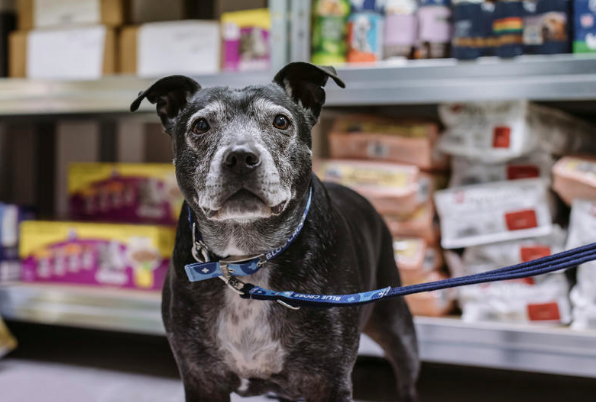
A Blue Cross charity pet food bank (c) image thanks to Blue Cross


Local to us here at Hubble & Hattie in Dorset charity Dorset Dogs have 23 drop-off points for food donations across the county, and can even arrange to collect! 
Dorset Dogs also has seven dog food banks – a lifeline for local dogs and owners in difficult times. 

Thanks to all those charities helping to keep pets and owners together by providing much-needed food!


Thursday, 4 May 2023

Emotional support animals - a trusted friend providing companionship and comfort

All animal lovers know how well a beloved pet can ‘tune in’ to our moods, sensing when we are unhappy, upset or stressed and offering reassuring snuggles and warmth. However, more recently, animals have been more formally recognised as being able to provide a key therapeutic role in helping people with a mental health or psychiatric disability. They are known as ‘Emotional Support Animals’ (ESAs).


The comfort provided by an emotional support dog


An emotional support animal is first and foremost a companion animal, not a service animal. However, in some countries, for example the USA, they have a legally recognised status, whilst in the UK they currently do not. This means, for example, that some US airlines are more lenient about having a support animal onboard a flight, whilst in the UK most don’t allow it. The majority of ESAs are dogs, but other animals can fulfil the role, too, including cats and other small animals.


The role of an ESA is distinctly different to that of a ‘service animal,’ and providing emotional support and companionship to someone with mental health or emotional needs is their key role. Service dogs generally require extensive training to do specific tasks for someone with physical or mental needs. The difference is that, as an ESA, just the animal’s presence helps the person to cope. Whilst the value of the comfort that an emotional support animal provides cannot be denied, it’s important to remember that the welfare of the creature should not be overlooked. Most people have a great bond with their animal(s) and treat them with respect, but there have been examples quoted in the media that throw into question whether the animal in the role of ESA was in a stressful situation. A peacock was denied a seat on a US flight although it was said to be an ESA, and in the UK an ‘emotional support’ cat was banned from a supermarket when accompanying its autistic owner. Not all creatures are happy in the company of strangers, and in busy and unfamiliar situations.


Cats can ‘tune in’ to emotions and provide comfort


A valuable role in emotional support


Several studies have shown that animals help to bring health benefits to humans. Through companionship, exercise, comfort and caring for another being, all have proved to lower blood pressure and increase the hormone levels associated with bonding. Research by the University of Toledo paired eleven people with mental illness with a rescue dog or cat, and results showed an improvement in their mental wellbeing. There is certainly more work to be done in this interesting area, but it does appear to confirm what animal lovers have always known: that the love and companionship of a companion animal is indeed therapeutic and life-enhancing, as long as the animal’s needs are respected, too.

Thursday, 13 October 2022

Do Animals Feel Emotion?

     Contented?


When you look at the images in this blog, what do you see? A relaxed happy cat, and a sad lonely dog? Or are we simply imposing our human emotions upon animals, because that’s what we think they are experiencing and expressing?

We’ll never know for sure, of course, whether animals’ brains are wired in the same way as ours, so we can only observe their behaviour and interpret it as best we can, based on our own emotions and learned behaviour. Owners believe that they understand how their pets are feeling through their behaviour and body language, and, let’s be honest, animals have also learned to be pretty good at communicating what they want to us, whether it’s their food bowl topped up, a walk, or just some pampering!

However, how much they really feel we’ll probably never know. Humans are very good at anthropomorphising creatures. Just look at the number of cartoon and fictional animal characters who speak, dress and interact with each other just like people. This must influence our perception of animal behaviour, if only subconsciously.

The jury is still out as far as science is concerned. Philosopher Philip Godfrey-Smith’s work Metazoa: Animal Life and the Birth of the Mind' explores three behaviours that provide clues in animals:


Do they tend to and protect injured body parts?

Most creatures except insects do

Do they consider costs and benefits?

Some do, for example by tolerating minor pain in order to be safe

Do they seek pain-killing chemicals after injury?

It’s been proven that some animals will opt to undertake behaviour that alleviates pain


    Sad and lonely?


But behaviours and emotions are different. It can be argued that animal behaviour is, to a large extent, instinctive and reactive: ie. driven by hunger or self-preservation. Reactions between different creatures to fear and threat also show that we can’t interpret behaviour consistently across species. Some may ‘freeze’ when threatened; others may run, and some attack. Some may do nothing at all. So even the ‘fight or flight’ response that we humans instinctively show is not the same for animals.

Ultimately we may never completely understand how animals experience the world. We know that some of their senses (sight, smell, hearing) are more highly developed than our own, whilst others (communicating) are less so.

Perhaps it’s best to simply respect and admire their differences to us, and enjoy the fact that we can share our lives with domesticated creatures who enjoy our company.


Thursday, 17 March 2022

Filling a ‘doggy void’ – Borrow my Doggy unites dog owners with dog lovers to share the love!

Have you heard about ‘Borrow my Doggy’? In the UK, it’s connecting dog owners with dog-lovers who, for whatever reason, can’t make a full-time commitment to having a dog, but who want to fill the dog void in their life!

‘Borrow my Doggy’ connects dog owners with local dog borrowers for walks, weekends and holidays, finding trusted dog lovers who can spend time with owned dogs, helping out their owners whilst getting all of the fun and love from a ‘part-time doggy’! For dog owners, it can help remove the worry of not being with their dog all the time, knowing that the dog borrower is able to provide quality time, walks and fun. It’s a win-win for the dog, their owner and the borrower!

Here’s a real-life story about how it has worked brilliantly for Jane from Dorset. She is a full-time solicitor with a busy social life, and so doesn’t have the time to have a ‘full-time’ dog at present. However, as a dedicated dog lover, she found the perfect solution through ‘Borrow my Doggy,’ as she explains:


For a while I’d been wanting my own dog but knew this was impractical, whilst working full-time. My cousin in London recommended ‘Borrow my Doggy.’ I looked on the website for a dog close to my home and, straightaway, there was Percy – an adorable Coton de Tulear – looking for walks and company when his owners are at work. I didn’t need to look any further!

Percy soon arrived for his first walk and, of course, I was immediately smitten. He made himself at home, exploring and generally getting his bearings before jumping onto the passenger seat of my car to have his seat belt secured for a drive to my favourite beach. He was in his element there. That was 6 years ago and we’re still enjoying wonderful walks. Just to see his excitement at reaching the sand, and his exuberance as he races along the beach is so uplifting.

                         Percy enjoying Jane’s local beach


One of the best things about Borrow my Doggy is its flexibility. It works well for Percy, his owners and for me. It also helps that Percy is local. This is important to me as it’s easier for last minute arrangements to be made for a walk or the occasional ‘sleepover’ if his owners are away for the weekend. There’s no set pattern.

It comes with its responsibilities. I’m always very aware when out walking Percy that he is someone else’s dog and I’m careful about where I let him off the lead. I’ve got to know and love his personality. He’s so expressive and I can tell when he’s considering a ‘bolt’ along the beach!

We’ve got quite a bond now. For me, Borrow my Doggy is the perfect arrangement. I would recommend it to anyone who likes the outdoors and walking. Percy has exceeded all my expectations and I can’t believe how lucky I was to find him.”


                      .....and relaxing after his exercise!


It’s heart-warming to hear how much both Jane and Percy enjoy their time together. They wouldn’t have been able to meet without ‘Borrow my Doggy’ introducing them and now have the perfect arrangement.

If you’re based in the UK and would like to find out more, as a potential borrower or owner, visit Borrow my Doggy’s website.