We are all well aware of how closely humans are related to chimpanzees – we share a total of 99% DNA! – but latest research has shed even more light on the subject: chimpanzees have distinct and stable personalities that develop as they age, just like us!
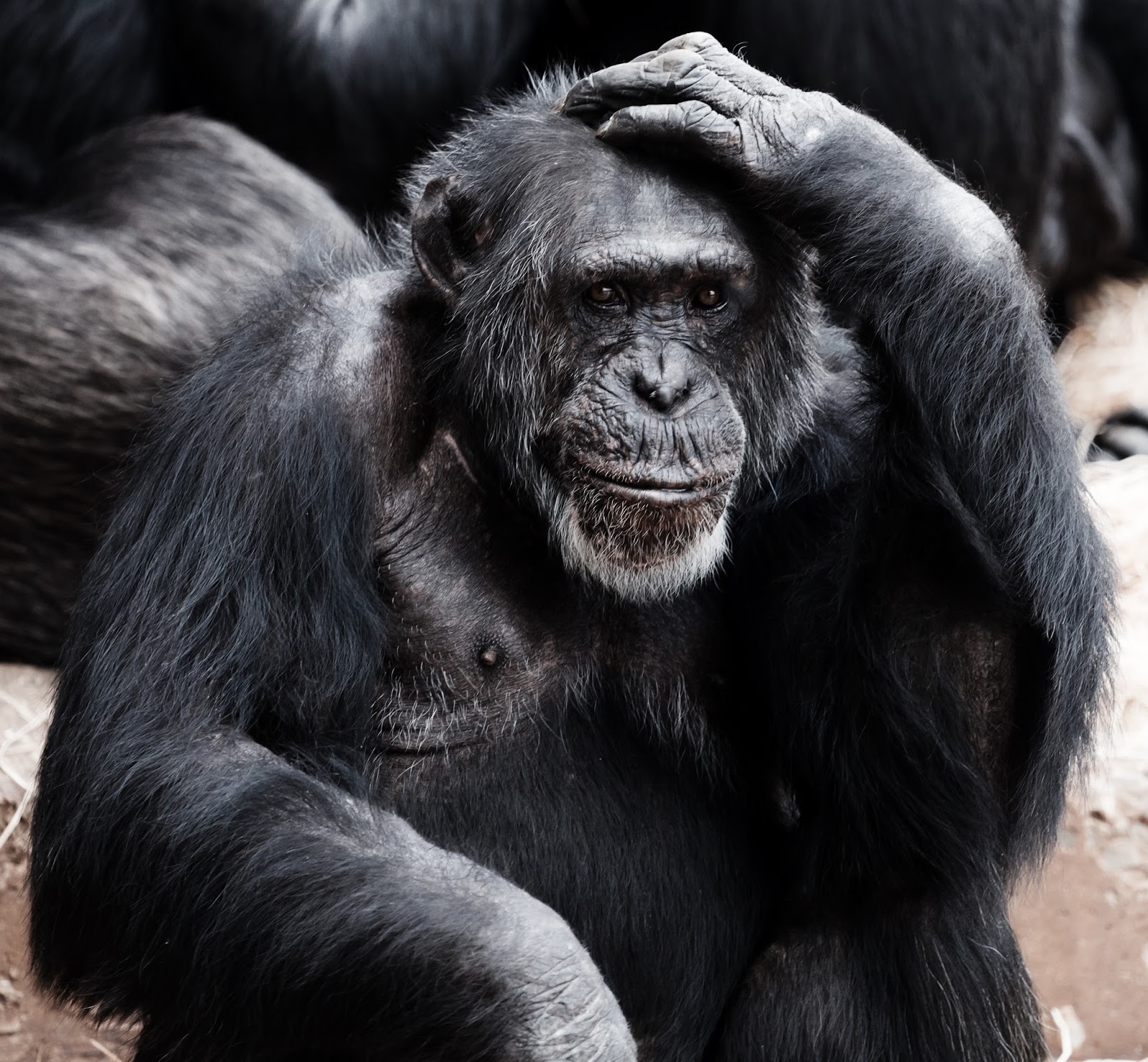 This new study, carried out by the University of Edinburgh, and published in the journal Scientific Data, provides fresh insight, suggesting that, over time, chimpanzee personalities become stable. Like humans, a chimpanzee might have playful, nurturing, affectionate or aggressive traits. As they get older they appear to become less extrovert, and a little neurotic, but also become more conscientious and agreeable – similar to how our personalities develop and change as we grow older.
The study built upon the research of Dr Jane Goodall. Back in the 1970s, the British primatologist conducted some ground-breaking research with the wild chimpanzees in the Gombe Stream National Park, Tanzania, in which she was able to establish that the apes had unique personalities. Furthermore, she found that female chimpanzees tended to be more trustful, timid or depressed, whilst the males tended to be more aggressive and sociable. This kind of research into animal personalities was ahead of its time, with a scientific interest in this field only taking hold at the turn of the millennium.
 Going back to the same group of chimps from Dr Goodall's original study, the Edinburgh university researchers discovered that their personalities had remained stable, whilst developing over time. Lead researcher Dr Alexander Weiss and his team collected more than 11,000 survey responses from those who had been observing the park's chimpanzees for 35 years, applied their own ratings system to their findings, and then compared their results to Dr Goodall's older Emotions Profile Index (EPI) questionnaire ... and found a distinct correlation.
Long-time studies of chimpanzees in the wild can ultimately be a highly beneficial source of insight into the evolution of human personality and behaviour. The stability of the chimpanzees' personalities could help scientists test how different personalities affect reproductive success, and other life outcomes in humans. Dr Weiss added: "Chimpanzees very likely differ as much from one another as we do as humans."


