
The comfort provided by an emotional support dog

Cats can ‘tune in’ to emotions and provide comfort

The comfort provided by an emotional support dog
Cats can ‘tune in’ to emotions and provide comfort
No one can fail to be moved by the scenes in the aftermath of the devastating earthquakes that hit
Turkey and Syria last month. Sadly, the number of those who lost their lives has been high in
both countries, and the the damage to buildings and infrastructure huge.
In the following days, countries around the world rallied to send resources and expertise
in search and rescue to help find survivors.

(c) Twitter M_Ebrard One of the Mexican dogs sent to hlp in Turkey
International search and rescue dog teams help find survivors
Mexico sent 16 experienced search and rescue dogs to Turkey. The country is itself prone
to earthquakes and during one in 2017 the dogs saved many lives and won the hearts of Mexicans.
A yellow Lab called Frida was credited with saving 12 lives across Mexico, and other quake sites in
Haiti, Guatemala and Ecuador.
Dog teams and handlers were also sent from Croatia, the Czech Republic, Germany, Greece,
Libya, Poland, Switzerland, the UK and the US. If a dog detects signs of life, debris often has to
be moved away very carefully and quietly, due to the risk of collapse and danger to those searching.
The dogs are highly trained to sniff out survivors, and can differentiate between them
and bodies, enabling the prioritisation of rescue of any people still alive in the rubble.
Amazing stories of survivors being rescued from collapsed buildings after many days have emerged,
thanks to the help of the dedicated rescue teams and their dogs.

(c) Twitter M_Ebrard Search dogs and thier handlers waiting to board a plane to Turkey from Mexico
Charities help rescue animals from the quake devastation
Not only people but animals have been rescued from collapsed buildings, sometimes weeks after the
earthquake. Charities such as Ernesto's in Syria, the Humane Society International (HSI) are
still rescuing both domestic pets separated from owners or sadly orphaned by the quake, and
farm animals found wandering or injured.

(c) HSI/facebook. Humane Society International worker rescuing a dog from the devastation
Amazingly, a dog was found alive in the rubble 23 days after the earthquake in Turkey (pictured
below), and a horse was also rescued, having survived after 21 days under rubble.
In Syria, the team from Ernesto's, an animal rescue charity, have been scouring the damaged towns
and villages for animals who need help. They either provide medication and food onsite or take
abandoned or orphaned pets back to their sanctuary where they can offer them a safe and happy life,
along with many other rescued cats, dogs and farm animals.
Amidst the heart-breaking loss of life, it is heartening to see that animals are both helping to
save lives, and themselves being rescued by caring people.

Members of the team from Ernesto's helping a young cat after the earthquake
Below, the dog found alive in Turkey 23 days after the earthquake (screenshot from film footage)

The journey to becoming an assistance dog

Puppies are trained from a young age to become an assistance dog


Finnian the Golden Retriever is a medical alert service dog whose primary job is cardiac alert for his owner.
He has amassed a huge following on Instagram and TikTok, that enjoys seeing his travels around the world with his owners and their two other dogs. Finnian’s family live in Massachusetts, and travel around the US in their converted van, as well as venturing further afield, overseas.
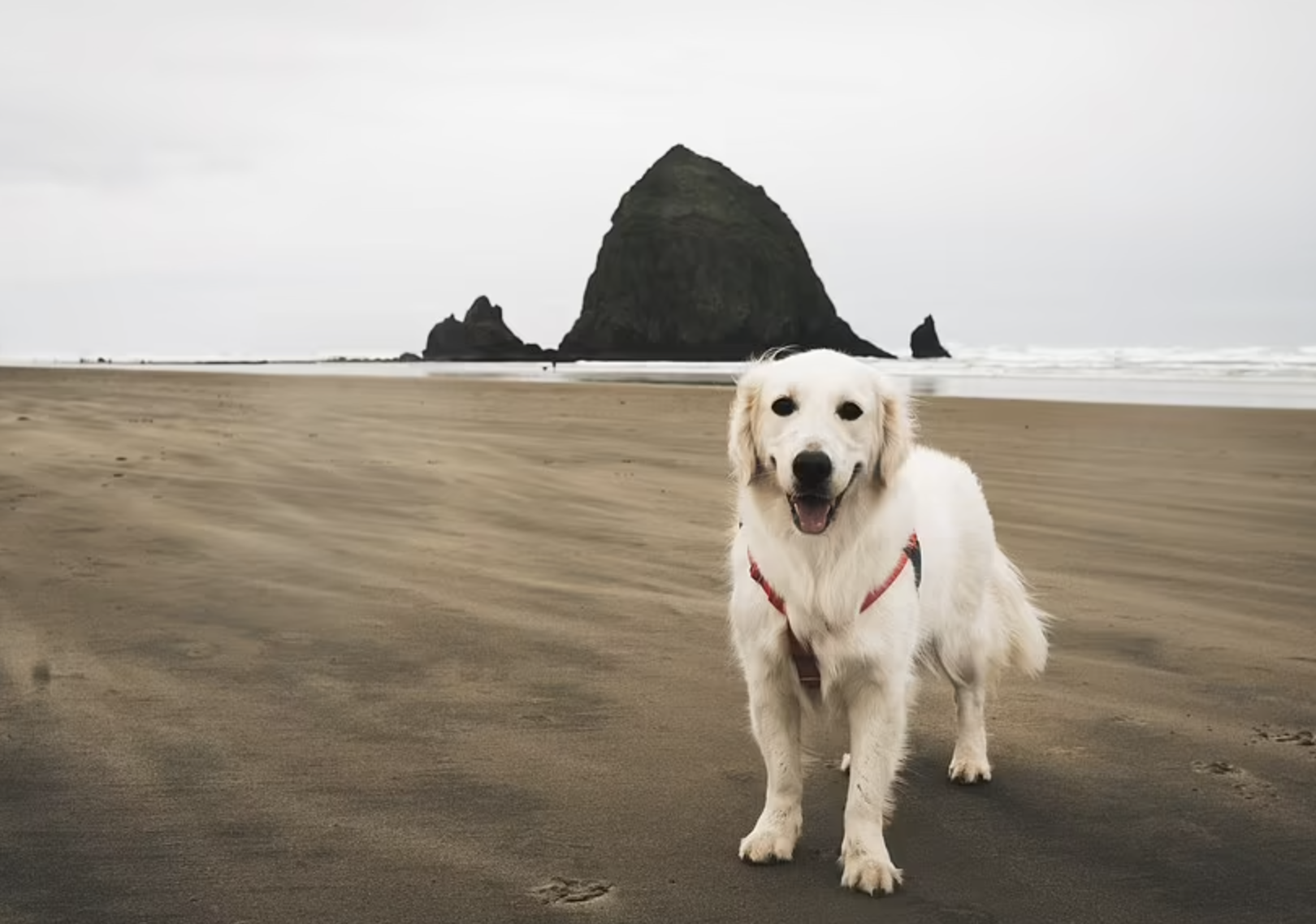
Finnian, who has lived with his owner since he was two months old, has formed an extremely strong bond with her, that travelling together has helped to strengthen; she has complete trust in Finnian to alert her should a medical episode occur. Finnian has a fulfilled life, exploring new destinations including Spain, France, Gibraltar, Iceland and Canada, as well as half of the American states. His globe-trotting is captured in photos shared via his social media accounts.
Finnian’s travel companions are Lacey, a six-year-old Pomeranian, and Keegan, a four-year-old Goldendoodle.
Finnian and Lacey are pictured below.

Finnian has enjoyed trips to several European destinations including Madrid, Spain (below). He enjoys an adventure, and one of the most viewed posts was of him exploring canyons in Utah using an abseiling-type harness that helped him to access the rocks safely.

You can follow Finnian’s adventures at:

Contented?
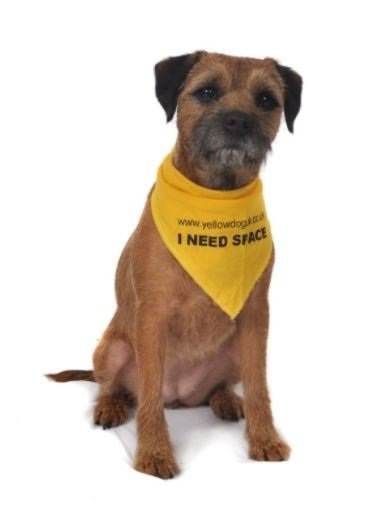
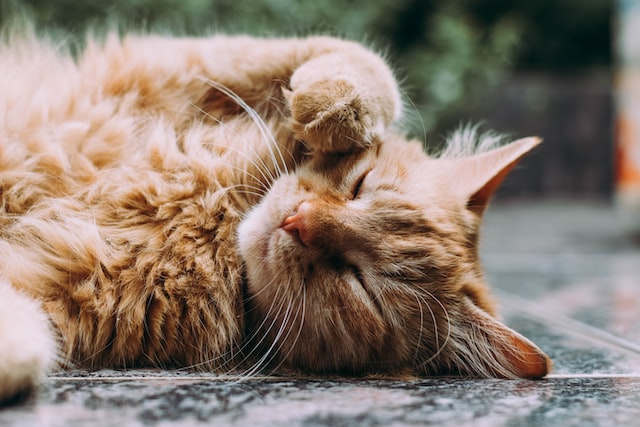
When you look at the images in this blog, what do you see? A relaxed happy cat, and a sad lonely dog? Or are we simply imposing our human emotions upon animals, because that’s what we think they are experiencing and expressing?
We’ll never know for sure, of course, whether animals’ brains are wired in the same way as ours, so we can only observe their behaviour and interpret it as best we can, based on our own emotions and learned behaviour. Owners believe that they understand how their pets are feeling through their behaviour and body language, and, let’s be honest, animals have also learned to be pretty good at communicating what they want to us, whether it’s their food bowl topped up, a walk, or just some pampering!
However, how much they really feel we’ll probably never know. Humans are very good at anthropomorphising creatures. Just look at the number of cartoon and fictional animal characters who speak, dress and interact with each other just like people. This must influence our perception of animal behaviour, if only subconsciously.
The jury is still out as far as science is concerned. Philosopher Philip Godfrey-Smith’s work Metazoa: Animal Life and the Birth of the Mind' explores three behaviours that provide clues in animals:
• Do they tend to and protect injured body parts?
Most creatures except insects do
• Do they consider costs and benefits?
Some do, for example by tolerating minor pain in order to be safe
• Do they seek pain-killing chemicals after injury?
It’s been proven that some animals will opt to undertake behaviour that alleviates pain

But behaviours and emotions are different. It can be argued that animal behaviour is, to a large extent, instinctive and reactive: ie. driven by hunger or self-preservation. Reactions between different creatures to fear and threat also show that we can’t interpret behaviour consistently across species. Some may ‘freeze’ when threatened; others may run, and some attack. Some may do nothing at all. So even the ‘fight or flight’ response that we humans instinctively show is not the same for animals.
Ultimately we may never completely understand how animals experience the world. We know that some of their senses (sight, smell, hearing) are more highly developed than our own, whilst others (communicating) are less so.
Perhaps it’s best to simply respect and admire their differences to us, and enjoy the fact that we can share our lives with domesticated creatures who enjoy our company.
A new study has discovered that dogs have an extensive pathway in their brains that enable them to 'see' as well as sniff with their highly-developed sense of smell.
Scientists in Cornell University, New York, found that sight and scent is integrated in dogs, to the point where even blind dogs can function extremely well by navigating their environment by smell.
All dog owners know how much dogs like to sniff, and navigate their way around by their nose. This new research, carried out on 23 dogs of various breeds, revealed through MRI scans that big neural pathways, or “information highways” exist between the olfactory part of the brain (responsible for interpreting the scents from the nose) and the part of the brain tied to vision. This pathway that links smell to vision isn’t found in people but is “thick and obvious” in the dog’s brain.
This appears to confirm that in dogs, the sense of smell is so highly developed that seeing and smells are interlinked in a dog’s perception.

As humans we can only imagine what the world must be like for dogs. Everything must be ‘hyper-real’ with a scent to accompany all they see. As owners, we must respect the dog’s need to stop and sniff at every opportunity. Sniffing and storing information is an enriching experience for dogs, and we can only admire their sensory powers.
Humans do of course utilise dogs’ highly developed smelling skills for tracking, by training sniffer dogs to search out certain substances or to track missing people.

Sniffer dogs play a vital role at airports
This research is just starting, as the same team want to investigate cats’ link between scent and sight, as it is believed that cats have the same strong neural pathways as dogs. Watch (or sniff!) this space.

